
Colbert County Criminal Case Files
A criminal court record is the court-maintained file, not merely the arrest record. In Colbert County, Circuit Court handles felony criminal cases, District Court handles misdemeanors and felony preliminary hearings, and municipal courts handle city ordinance violations and many municipal traffic matters. The Circuit Clerk is the records custodian for Circuit and District Court case files. Formal charges, pleas, motions, orders, bond entries, disposition, sentence, restitution, and costs appear through the court case record.
The arrest-to-charge pathway is separate. Booking entries may appear on the sheriff roster, but the court file controls the formal prosecution record. For the charge itself, see the Colbert County arrest records and court charges page. For all civil, probate, traffic, and federal routes, use the broader court records page.
Search Colbert County Criminal Court Records
Alacourt ACCESS is the official paid route for Alabama trial-court case records, including criminal case details. A search can use a defendant name or a case number. Reports may show basic case information, court action, case status, setting dates, party information, financial history, and a detailed case-action summary. Older records, certified copies, and non-digitized files should be requested from the Circuit Clerk.
The Alabama expungement definitions statute is one of the state-law sources that affects criminal-record visibility.
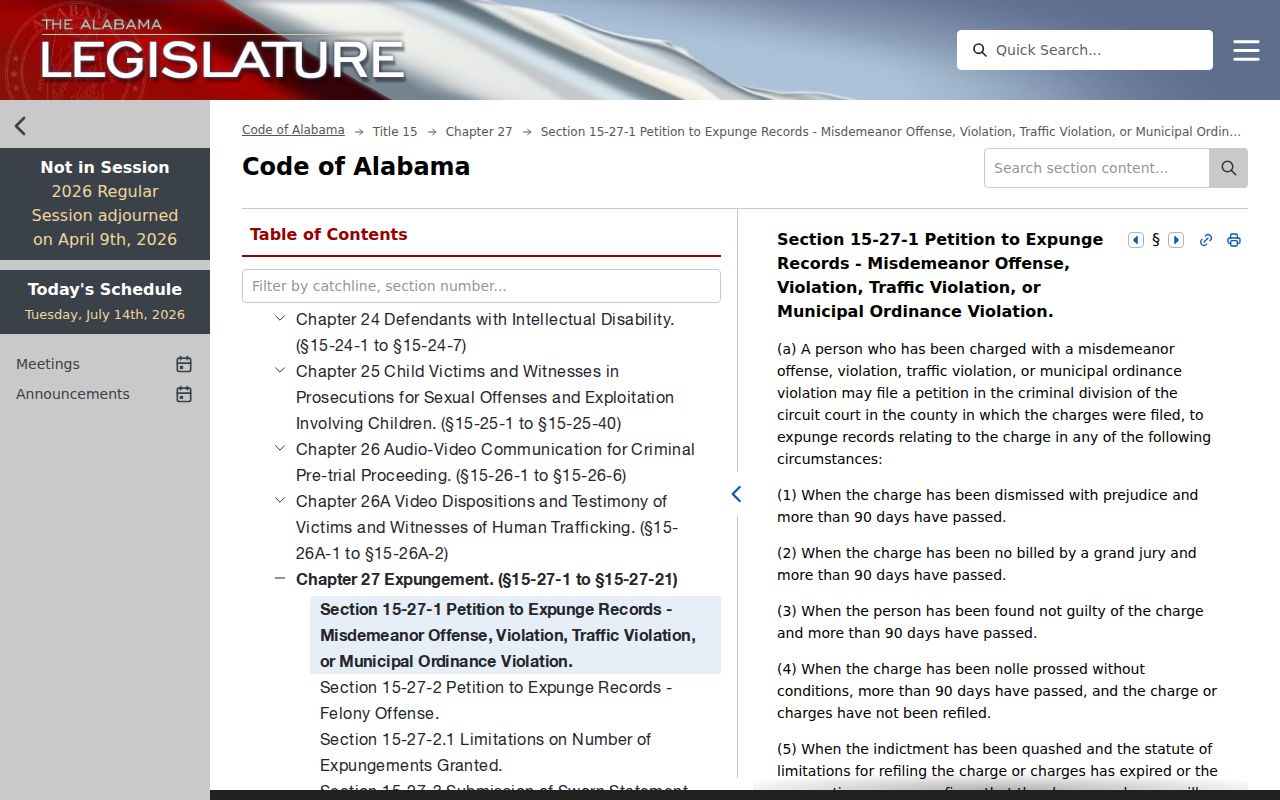
Expungement terms matter because a missing public result can reflect legal limits rather than the absence of a case.
- Identify whether the matter is felony, misdemeanor, municipal, or a preliminary felony hearing.
- Search Alacourt ACCESS by defendant name or by case number if one is known.
- Open the case detail and read the docket, charges, status, setting dates, financial entries, and disposition.
- Contact the Circuit Clerk at (256) 386-8511 for certified copies, case-action summaries, or records not shown online.
- Use municipal court contacts when the charge was issued by a city and does not appear in state court records.
Colbert Criminal Case Stages
A criminal case record grows as the case moves. The charge starts the formal accusation. Arraignment records the plea process. Pretrial entries show motions, continuances, bond issues, and hearing settings. The case then moves to plea, trial, dismissal, or another disposition. Sentencing entries may show jail, prison, probation, fines, costs, restitution, or other terms ordered by the court.
Case flow: Charges Filed › Arraignment › Pretrial / Motions › Plea or Trial › Disposition › Sentencing
| Stage | What Happens |
|---|---|
| Charges filed | A complaint, information, indictment, or related filing starts the formal court charge record. |
| Arraignment | The defendant is advised of charges and enters a plea. |
| Pretrial and motions | The docket records hearings, orders, continuances, evidence motions, bond matters, and notices. |
| Plea or trial | The case reaches a plea, trial verdict, dismissal, acquittal, or other court action. |
| Sentencing | The court enters punishment, costs, restitution, probation, or custody terms after conviction. |
What Colbert Criminal Records Show
Criminal court records in Colbert County can show both case-level details and charge-level details. The record may list the State and defendant, attorneys, judge, filing date, court, case number, charges, docket actions, plea, disposition, sentencing, financial history, and bond information. Court records may also show whether a charge was dismissed, reduced, amended, or carried to sentencing.
| Field | What It Shows |
|---|---|
| Case number | The court identifier needed for precise lookup and copy requests. |
| Defendant | The person accused in the criminal case. |
| Charges | The accusation filed with the court, which may differ from booking text. |
| Plea | The defendant's formal answer, such as guilty or not guilty. |
| Docket entries | Hearings, motions, orders, continuances, notices, and court actions. |
| Disposition | The outcome of a charge or case, including dismissal, plea, verdict, or other result. |
| Sentence | Jail, prison, probation, fines, restitution, costs, or other punishment after conviction. |
Charges vs. Convictions
Being charged is not the same as being convicted. A Colbert County criminal court record may show charges that were later dismissed, reduced, amended, or resolved with no conviction. The disposition and sentencing sections are the key parts of the record when a reader needs the final outcome. If the record shows only an accusation, it should not be read as proof of guilt.
| Charge | Conviction | |
|---|---|---|
| Meaning | An accusation filed or listed in the case | A guilty result by plea, verdict, or court finding |
| Record location | Complaint, information, indictment, or docket | Disposition and sentencing entries |
| Use caution | May be pending, amended, or dismissed | Still verify sentence, appeal, and expungement status |
Sealed and Expunged Criminal Records
Alabama limits access to certain criminal records. Juvenile legal files are confidential under Alabama Code Section 12-15-133. Adult expungement eligibility is addressed in Section 15-27-2, and the exact outcome matters. Dismissal, acquittal, no-bill, waiting periods, conviction status, and offense category can affect eligibility.
The Alabama adult expungement eligibility statute governs many public-access questions for criminal case records.
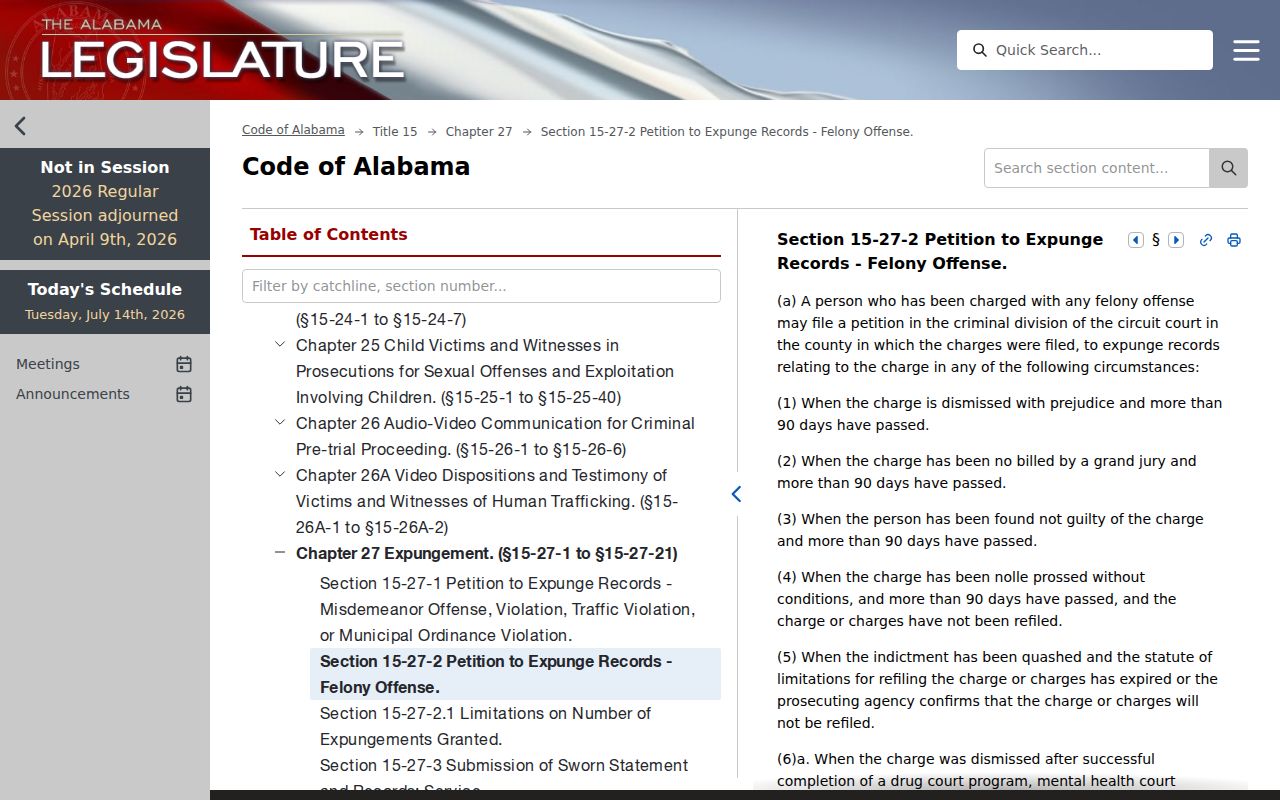
Check the statute and the court file before assuming a criminal record qualifies for expungement.
| Sealed | Expunged | |
|---|---|---|
| Public view | Hidden from ordinary public access | Removed from routine public systems by court order |
| Agency access | May still be available to courts or justice agencies | May remain available to entities named by law |
| Practical step | Ask the court that keeps the case | Confirm eligibility before filing a petition |
Public Access to Criminal Records
Alabama Code Section 36-12-40 broadly supports inspection and copying of public writings and records unless another law restricts access. In practice, Colbert County criminal case files are requested from the court that keeps them. Circuit and District records route through the Circuit Clerk. Municipal criminal or ordinance files route through the city court. Federal criminal files route through federal systems such as PACER and CM/ECF, not the county clerk.
The Alabama juvenile confidentiality statute is a key limit on public criminal-court access.
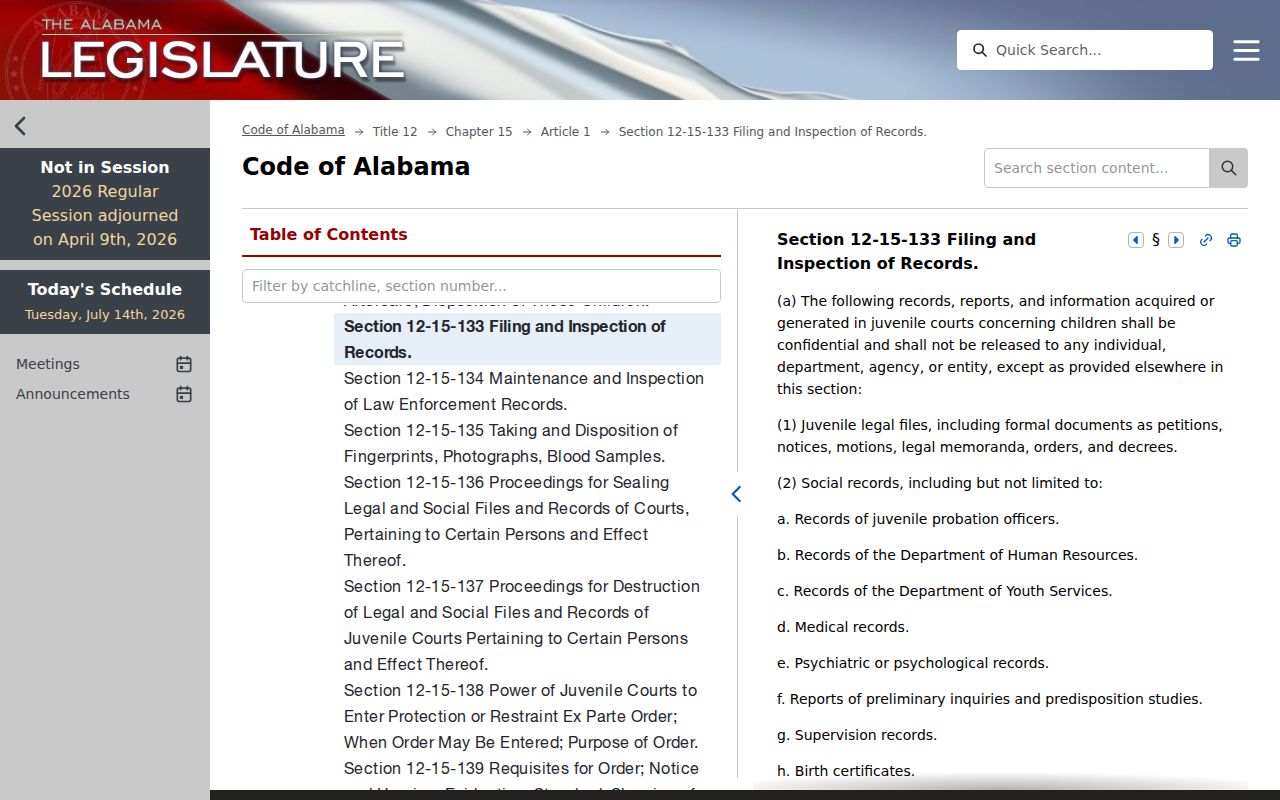
Juvenile confidentiality is one reason a search may not show every court-linked criminal matter.
Note: Certified dispositions, older files, and records not shown online should be requested from the record custodian.
Other Restricted Criminal Files
Adoption records and hearings are confidential under Alabama Code Section 26-10E-30. Probate mental-health commitment materials are also sensitive. Criminal filings that contain personal identifiers, minors' names, financial-account data, medical facts, or sealed attachments may be redacted even when the main case docket is public.
The Alabama adoption confidentiality statute explains why some court files are outside routine public search.
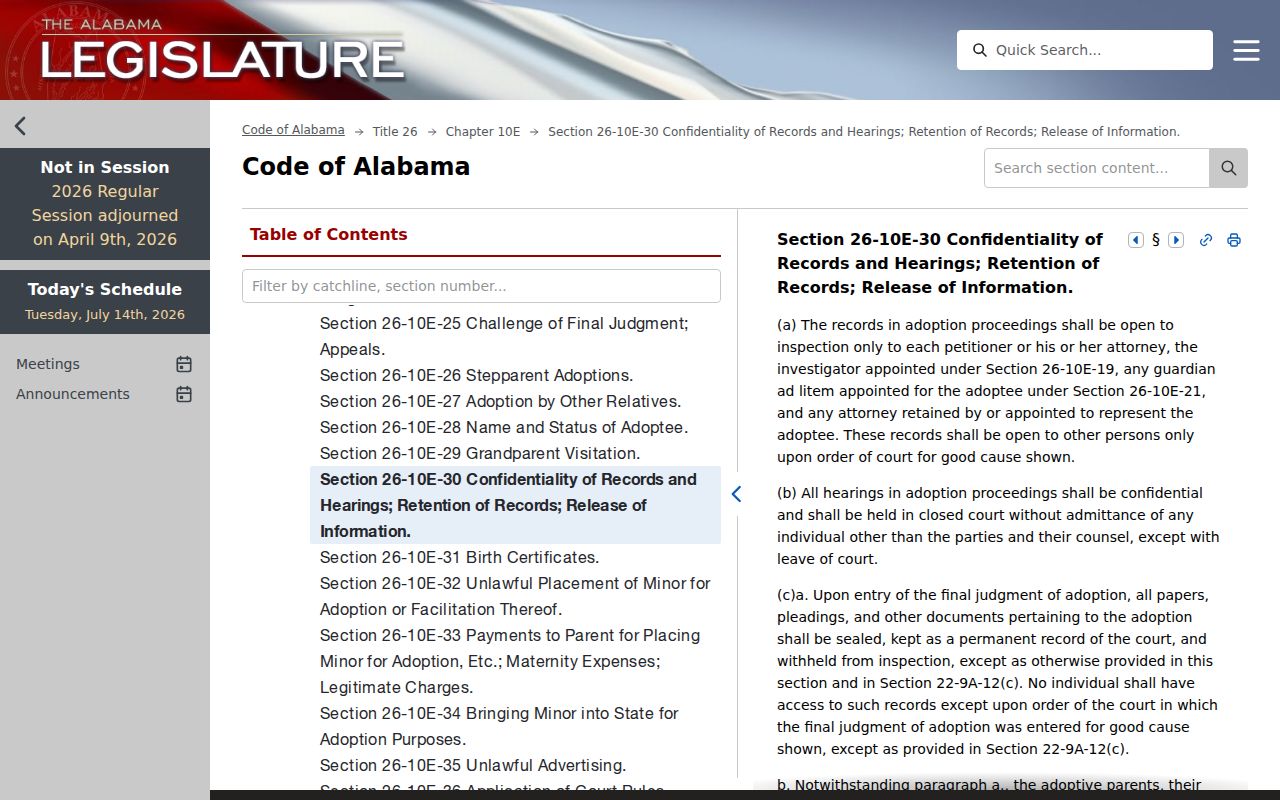
Confidential family or probate-linked records should be handled through the court, not through a general public lookup.
Custody Records Are Separate
Jail custody and state-prison records are not the same as criminal court records. The Colbert County jail roster may show a person in county custody, while the Alabama Department of Corrections search covers current state-prison inmates. A person can have a criminal court case without being in custody, and a booking record can exist before the formal court file is updated.
The Alabama DOC inmate search is a custody tool for current state-prison inmates.
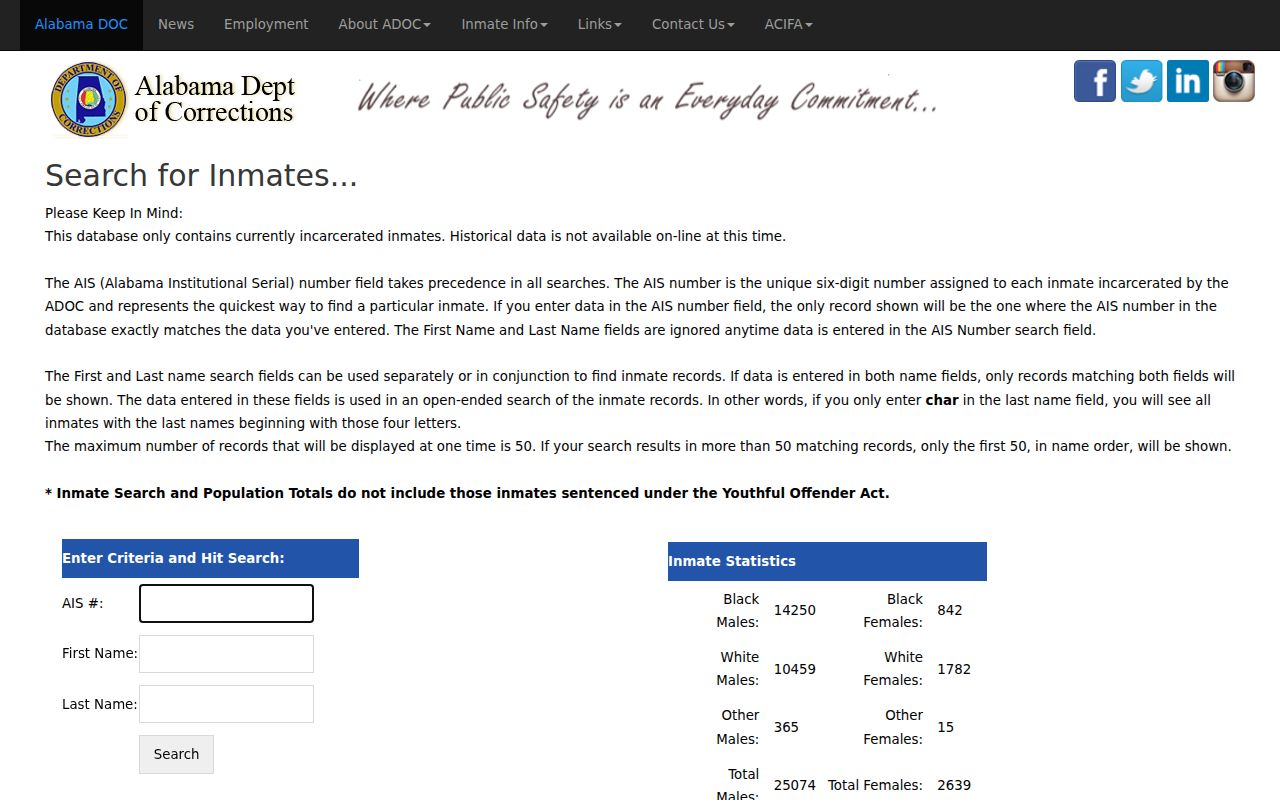
Use DOC for state-prison custody, the sheriff roster for county jail custody, and the court record for the prosecution history.
Reading Criminal Dispositions
The disposition is the part of a criminal court record that answers what happened to the charge. A docket may show guilty, not guilty, dismissed, acquitted, nolle prosequi, amended, reduced, or another outcome. It may also show that one count ended differently from another count in the same case. A person reading a Colbert County criminal record should not stop at the first charge line. The charge, plea, disposition, and sentence must be read together.
Sentencing entries can include jail, prison, probation, fines, costs, restitution, court-ordered programs, or other terms. Financial history can show costs and payment activity. Bond entries can show release conditions or bond-related events, but current bail after arrest should be confirmed with the detention center because the sheriff roster warns that charges and bail may change after court appearances. If an appeal is filed from a lower court, the Circuit Court record can show the new proceeding and later outcome.
- Plea
- The defendant's formal response to a charge.
- Disposition
- The final outcome of a charge or case.
- Sentence
- The punishment or conditions ordered after conviction.
- Restitution
- Money ordered to repay a victim's loss.
Defense and Prosecutor Entries
The jury-information research says the district attorney is the elected prosecutor for state criminal cases and represents crime victims. It also says an indigent defendant may have an attorney appointed at state expense, although the court can require reimbursement if the defendant is able. Those facts can appear in the record through attorney entries, appointment orders, hearing notices, restitution orders, and payment entries.
No Colbert-specific public defender office page was located in the research. Alabama's Office of Indigent Defense Services provides statewide financial services, guidance, and oversight for appointed-counsel payments. For a specific criminal case, the court record and clerk remain the source for appointed counsel, case status, and hearing entries. If the docket references counsel, a plea date, or a sentencing entry without enough detail, request the case-action summary or the specific order from the Circuit Clerk. That request should include the defendant name, case number if known, and the record needed. Ask whether copy certification is available.